
Light changes from one environment to the next, through four completely different physical mechanisms
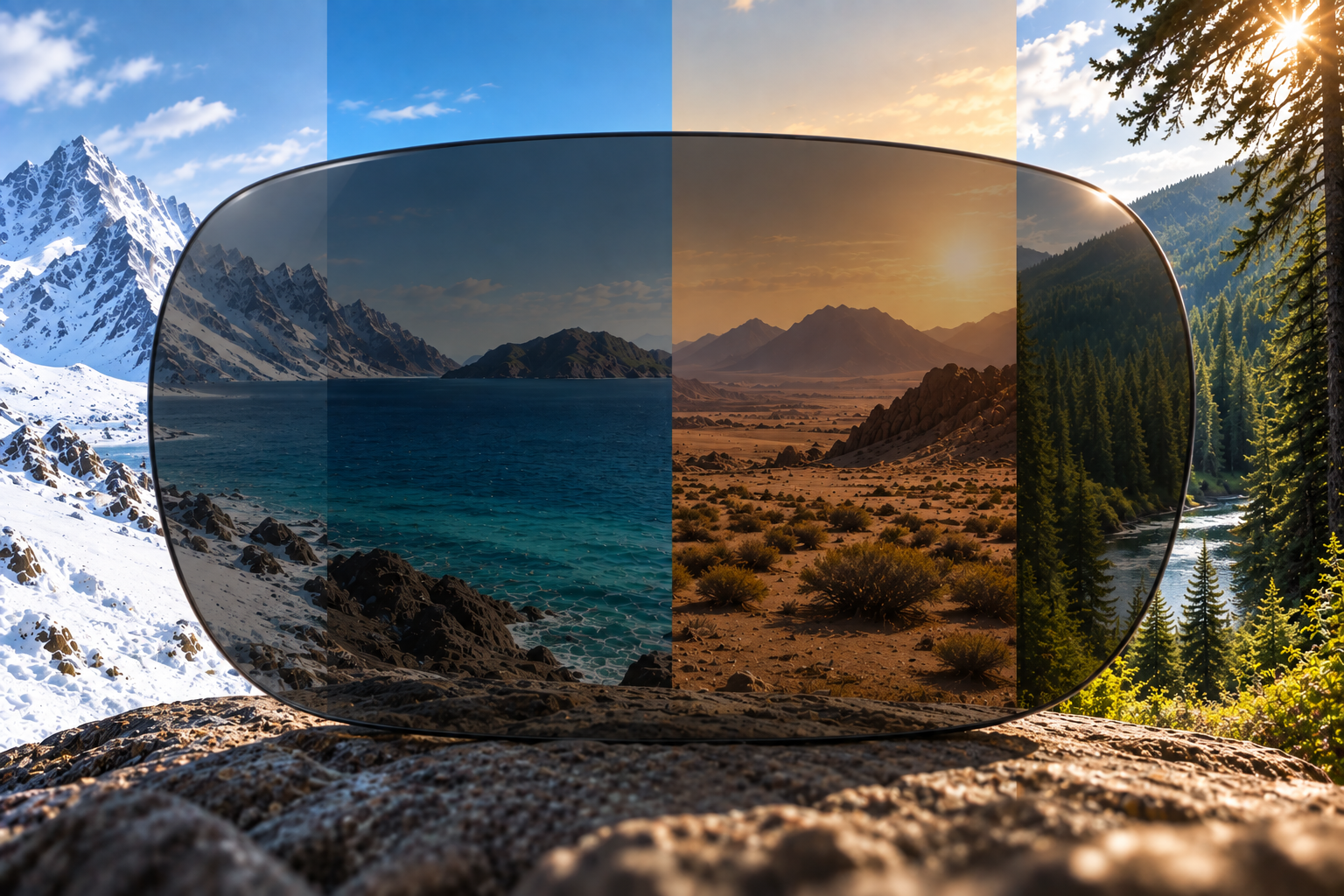
Fig. 1: One lens, four environments, four different light problems.
As seen in the first figure, snow, water, desert, ocean, and forest are not the same visual problem. An everyday urban or suburban scene contains a balanced mix of warm, cool, and neutral colors, but many natural environments are shifted hard toward one group instead. That’s not a stylistic observation. It reflects real, measurable differences in the light itself, in its color or in how much of it arrives and from where, and each environment gets there through its own separate mechanism.
Shaded snow is lit by a bluer sky
Photographers have measured this for decades. Direct daylight sits around 5,000 to 5,500 Kelvin on the color-temperature scale. Open shade, lit by blue sky rather than direct sun, runs closer to 7,000 to 8,000 Kelvin, a distinctly bluer light, and snow in shade takes on that same cooler cast. That’s why snow photos taken on auto white balance often come out with a blue cast: the light on shaded snow is genuinely cooler in color than an ordinary daylight scene, not imagined.
Water removes color, wavelength by wavelength
Ocean and watersport environments present a different problem entirely, one of subtraction rather than shift. Water absorbs light unevenly by wavelength. In clear water, red is largely gone by roughly 5 meters of depth, orange by around 10 meters, and yellow by roughly 20 meters, while blue and green penetrate far deeper. Published figures vary somewhat with water clarity and how they are measured, but the order does not. Anything seen at depth, or light returning from below the surface, has already lost its warmer colors on the way, a genuinely different optical mechanism than the bluer light of shaded snow.
Desert light comes from the ground as well as the sky
Desert environments work differently still. Desert sand reflects roughly 35 to 40 percent of the sunlight that hits it, an albedo of about 0.35 to 0.4, compared with roughly 15 to 18 percent for a deciduous forest and as little as 6 percent for open ocean under a high sun. That means a much larger share of the light reaching the eyes in a desert comes from the ground bouncing sunlight back upward, on top of the sun overhead, which adds to the brightness and glare. Here the change is in how much light arrives and from where, more than in its color.
Forests filter light through their own chemistry
Forest canopy shifts light for a reason that has nothing to do with scattering by the sky or reflection off the ground: pigment. Chlorophyll absorbs blue and red wavelengths most strongly, the ones plants use for photosynthesis, and only a small fraction of green is reflected or transmitted, which is why leaves look green. Leaves also let far-red light, which people can’t see, pass almost untouched. The result is that light under a canopy is depleted in blue and red, and to the eye skews greener than the roughly balanced spectrum of an open field. The plants themselves are doing the filtering.
Shaded snow is lit by blue sky, water removes color by depth, desert sand throws extra light back up from the ground, and forest canopy filters light through chlorophyll: four different mechanisms, four different problems.
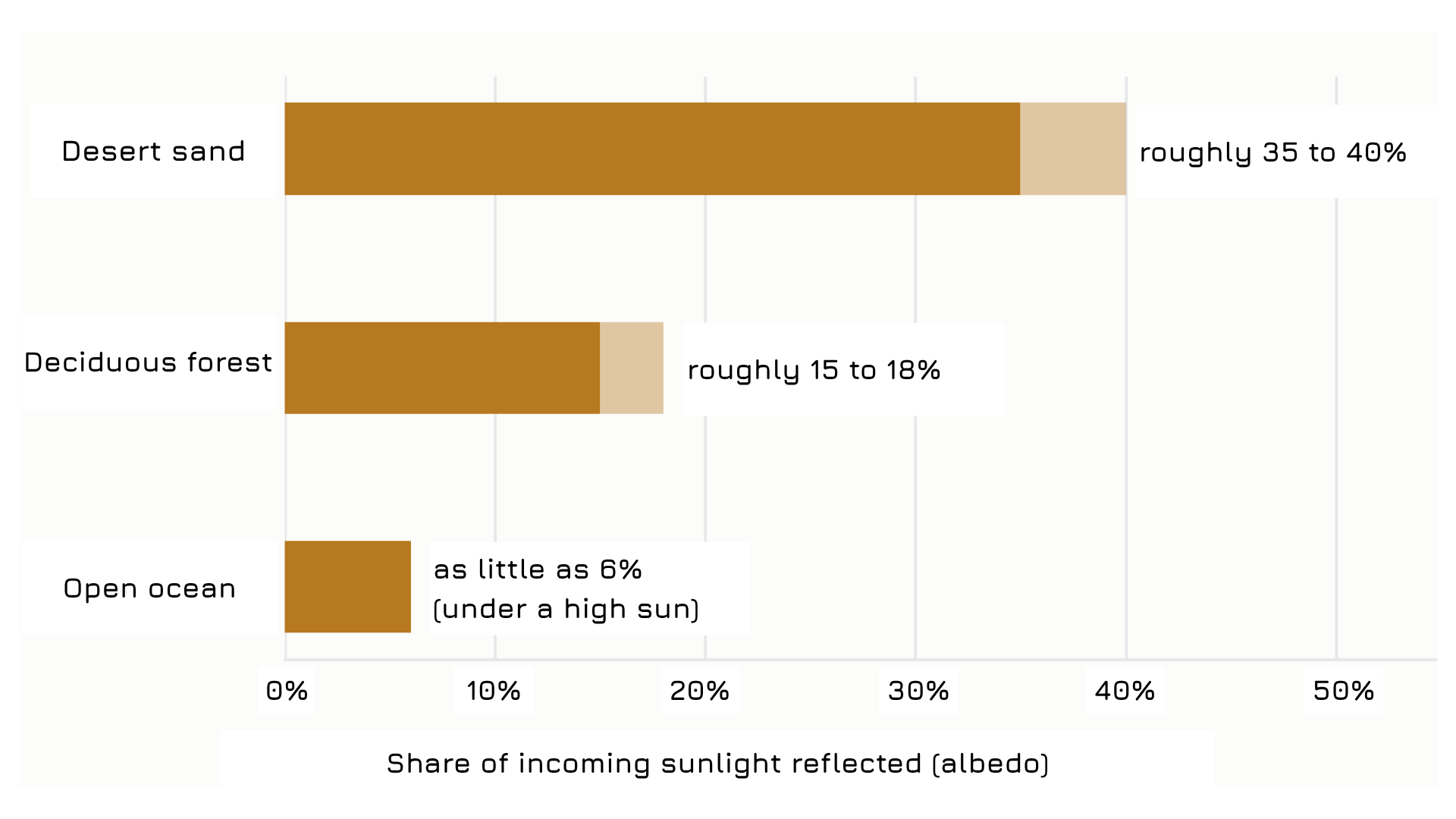
Fig. 2: Sunlight reflected by sand, forest, and ocean.
Colorboost's take on the difference
Colorboost treats this as a design variable, not an afterthought. On its published reference figures, a Colorboost lens measures 135% CRF and 99% CAF against a clear lens, alongside a 35% larger color volume, meaning the gain in color separation comes without meaningfully distorting the color itself. Its lenses can then be tuned to a specific environment to raise visual performance where it’s needed most, rather than optimized for the balanced, everyday scene that general-purpose tints assume. The physics above is exactly why a single tint can’t do the job everywhere.
If snow, water, desert, and forest each change light through a completely different mechanism, does it make sense to expect one general-purpose tint to handle all four? What would you actually notice first, if your lenses matched the environment in front of you instead?
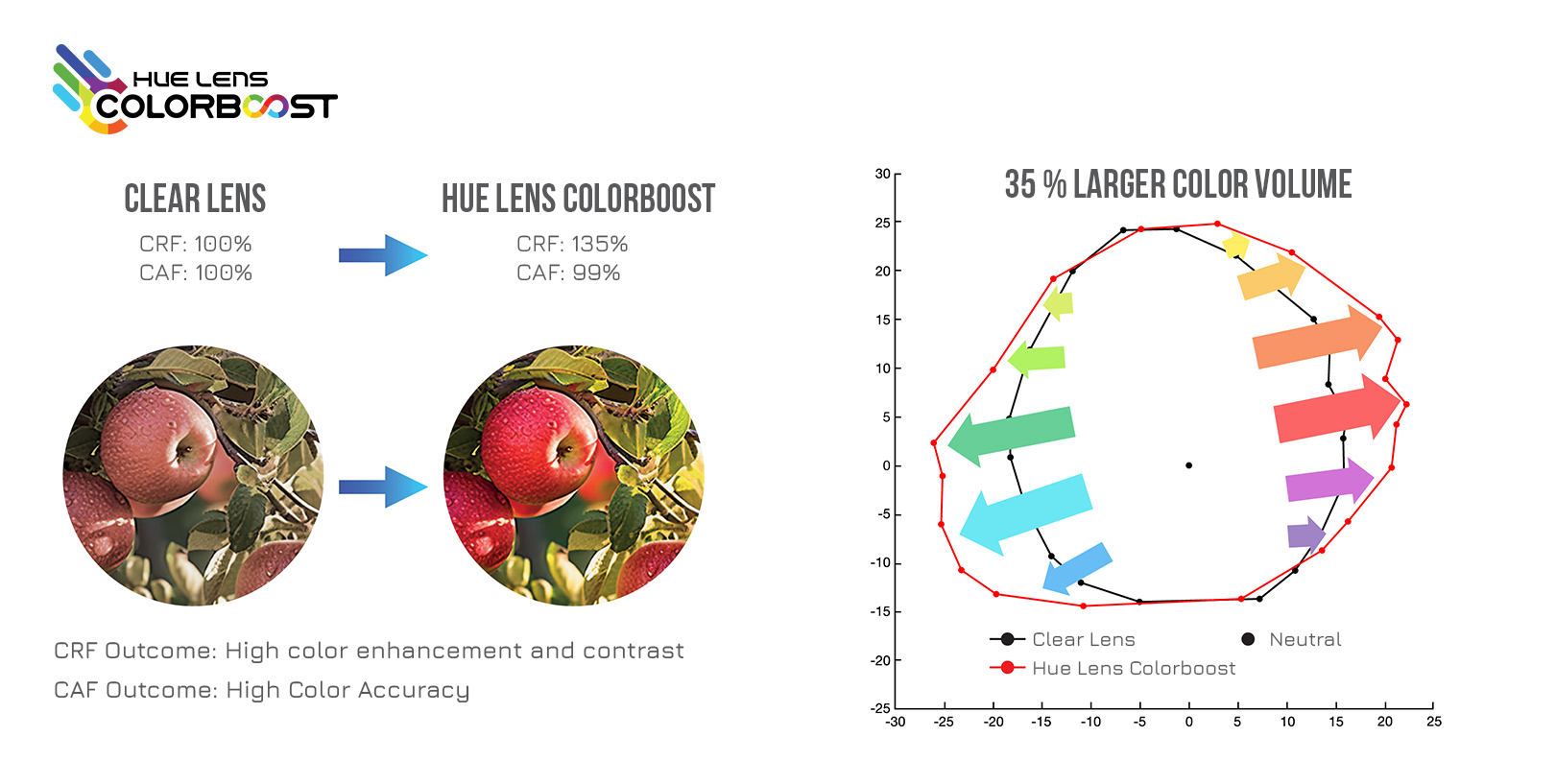
Fig. 3: A 35% larger color volume, visualized: more colors resolved, with accuracy held nearly level. Colorboost
Sources: Environment-specific color shift and lens-tuning claim: MAFO 5-26, “Putting a number on color” (source article). Color temperature of daylight and open shade: Nikon Z 7 online manual, “White Balance,” https://onlinemanual.nikonimglib.com/z7/en/05_basic_settings_02.html; digital photography school, “Setting the Mood by Adjusting Your White Balance,” https://digital-photography-school.com/setting-the-mood-by-adjusting-your-white-balance/; winter white balance: Nikon School, https://nikonschool.co.uk/hints-and-tips/get-the-white-balance-right-in-winter. Wavelength-dependent light absorption underwater (depths vary by source): Dive Volk, “Unveiling the Deep: The Science Behind Why Colors Disappear Underwater,” https://www.divevolkdiving.com/blogs/product-tips/why-colors-fade-underwater; ScubaGuru, “How Scuba Divers See Color Change Underwater,” https://scubaguru.org/nj-scuba-articles/how-scuba-divers-see-color-change-underwater/. Surface albedo values (desert sand, forest, ocean, and the effect of sun angle on water): Penn State, Earth 103, “Albedo,” https://www.e-education.psu.edu/earth103/node/1002; University of Colorado Boulder, MOSAIC, “Quick Bite: Albedo Comparison,” https://mosaic.colorado.edu/node/5955. Chlorophyll absorption and canopy light: Smith, H., “Phytochrome-mediated responses: implications for controlled environment research facilities,” NASA Technical Reports Server, https://ntrs.nasa.gov/api/citations/19960011695/downloads/19960011695.pdf; “Transmissivity of solar radiation within a Picea sitchensis stand under various sky conditions,” Biogeosciences 12 (2015), https://www.biogeosciences.net/12/4195/2015/. CRF 135% / CAF 99% / 35% larger color volume reference figures: Colorboost brand materials (Fig. 2).